TA wrote a lengthy article analyzing that Kane is not only the top scorer, but also the core of Bayern's offense and defense.
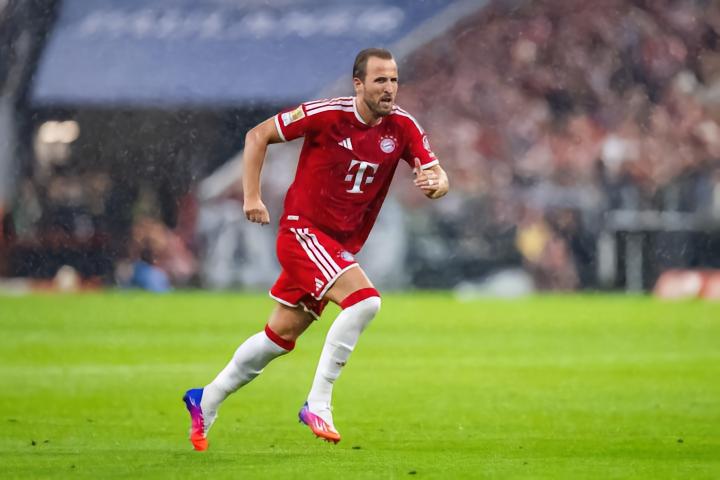
It was late summer in the Bavarian countryside, and a light mist hung in the air.
At a sports club half an hour's drive outside Munich, sunlight streamed onto the light-colored stone buildings, deer grazed peacefully beside the grass, and Harry Kane recounted a legendary season to the sports newspaper.
Kane has scored 73 goals for club and country. However, due to his equally outstanding performances in other areas, he is also the frontrunner for the Ballon d'Or later this year. Kane is one of the world's top goal scorers and the creative, physical, and emotional core of Bayern Munich. Bayern won the domestic double last season and will continue their pursuit of the European title this season.
So, the computer was placed among us, and the highlights were already loaded. Each segment showcased a different part of his game, piecing together his best moments. The England captain was ready to show us what football looks like through his eyes.
This is Harry Kane, "My Game, My Words".
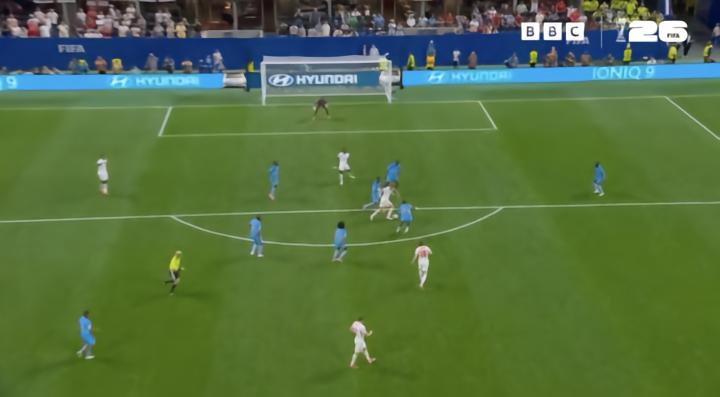
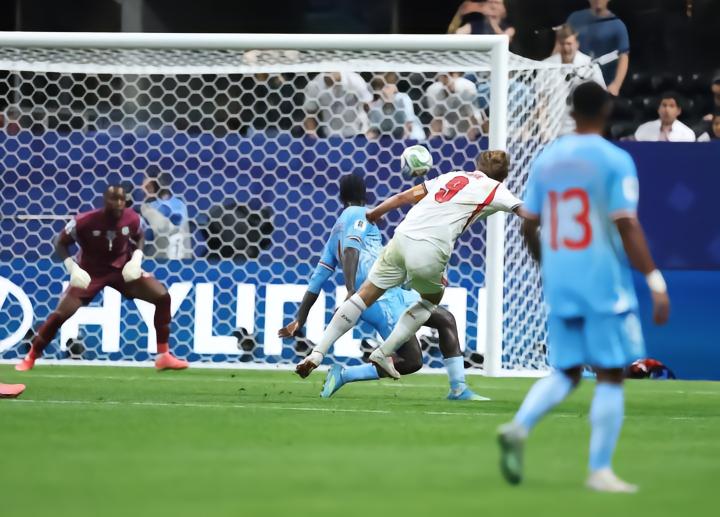
This is the 86th minute of England's World Cup Round of 16 match against the Democratic Republic of Congo. The score is 1-1, Kane has just equalized, and he is about to score a high-quality winning goal.
"This is one of the best goals I've scored while wearing an England shirt," he said. "Maybe one of the best in my career."
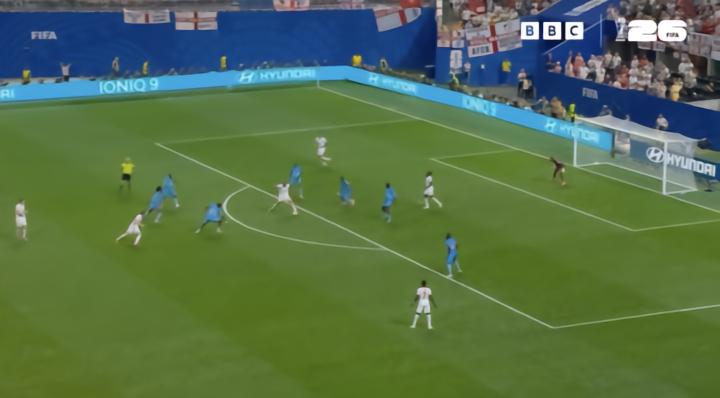
At the time, he had his back to the goal, surrounded by three defenders, and his teammates Bukayo Saka and Anthony Gordon were also in positions to receive the ball, so it didn't look like a shooting opportunity at all.
"Whenever I'm near the penalty area, especially on the edge of it, my first instinct is always to shoot. Because I know that if I can control the ball well there and then take a clean shot, it will either test the goalkeeper or result in a goal."
“Ante saw the passing lane very well this time, because he could have dribbled the ball a little further to the wing, but he saw the forward run and pass.”
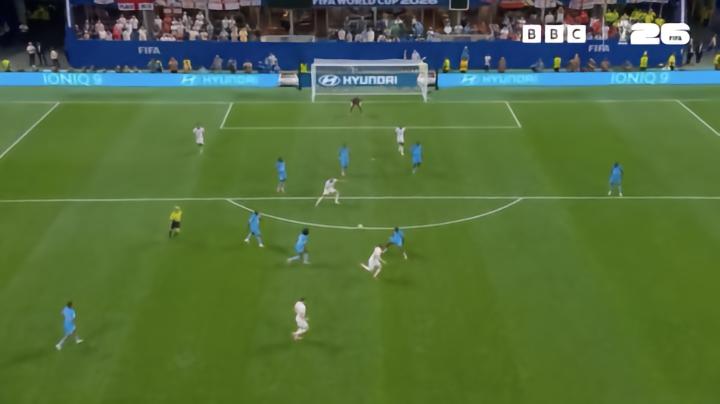
"I try to receive the ball using a half-turn as much as possible, so I can feel a little space between myself and the defender. After receiving the ball, I immediately judge where the best position to shoot is, or rather, where the fastest position to shoot is."
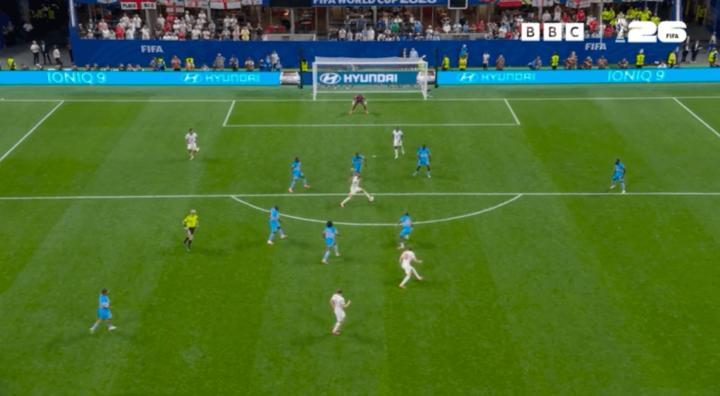
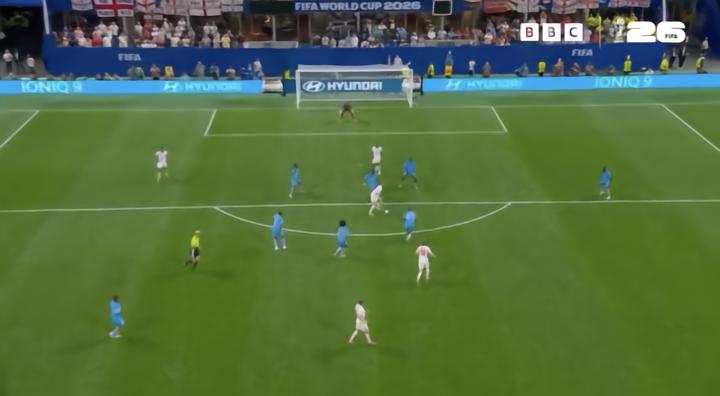
“I don’t know if you can tell,” he said, pointing to the moment he got rid of the defender, “I would slow down first, touch the ball lightly, wait a moment, then take a bigger touch on the ball and accelerate immediately.”
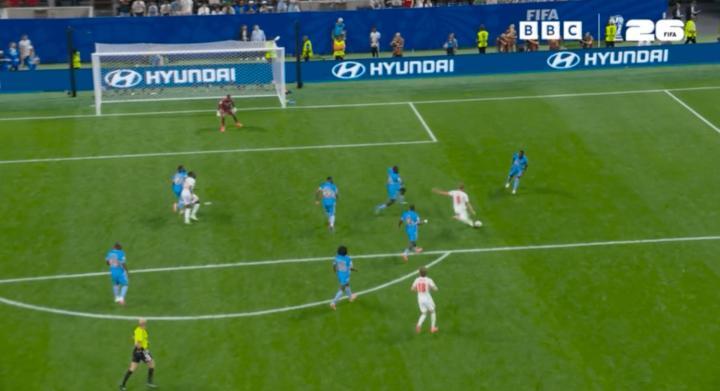
“Recently, someone—also a player—told me that my biggest advantage is that I can still score even in an uncomfortable position. That is to say, even if I lose my balance, I can still shoot. Many players cannot generate the same power in that position.”
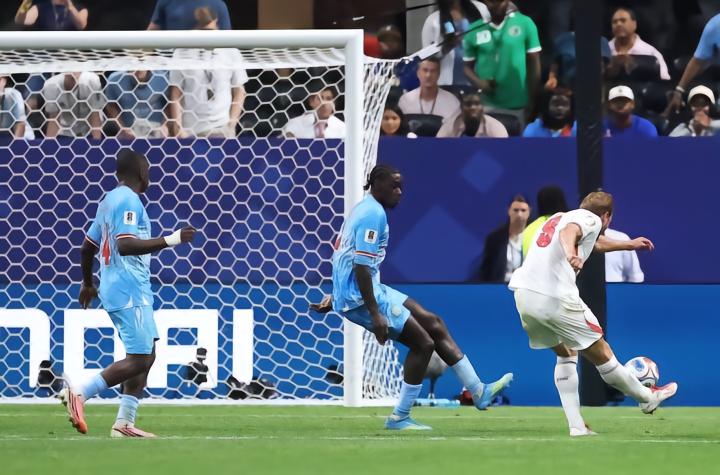
This tendency has been a constant throughout Kane's career. Just look at last season alone: there are numerous examples of him still managing high-quality shots even when off-balance or under pressure. These include his first goal of the season against RB Leipzig, a curling shot from the edge of the box against Union Berlin, and his goal in the second leg of the Champions League quarter-final against Real Madrid.
The same was true for the winning goal against the Democratic Republic of Congo. Kane took the shot while running, almost perpendicular to the goal, yet still managed a pure and powerful strike.
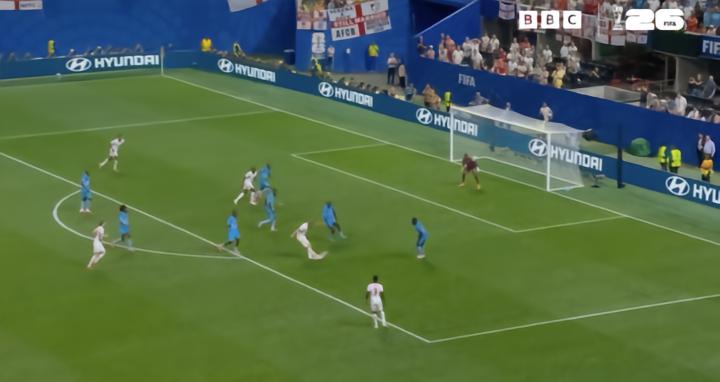
But in the instant after Kane shook off the defender, was his attention solely focused on that touch, or was there a more specific method behind it?
"When I got there, I already knew that the defender was blocking my path to the side, so I was thinking: can I use my strength to shoot, can I hit the near post?"
"Then, whenever I hit the near post, I always think that the shot might have to be taken from the outside of the near post. So in this situation, I'm actually taking advantage of that defender."
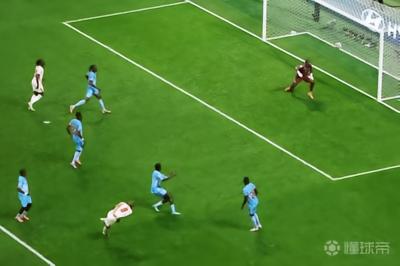
"Everything moves so fast in a game that you often see the defensive players' positions rather than who they are. That's why I often practice with dummies: because it teaches you to observe with your peripheral vision."
"So now I know that he's blocking part of the goal, so I think I need to shoot with power, and the shot needs to be placed on the outside of him, and then I see how much power I can generate."
One of Bayern's most important nights of the season occurred in April, when they faced Real Madrid at the Bernabéu in the first leg of their Champions League quarter-final.
Kane was involved in the first goal, which was ultimately scored by Luis Diaz. He then scored the second goal, a typical attacking combination, full of understanding, quick decision-making, and ruthless execution.
The attack occurred just seconds into the first half. Aleksandar Pavlovic intercepted the ball in midfield, and Real Madrid players, positioned further forward and outnumbered, launched a counter-attack with Michel Diaz, Olise, and Gnabry.
Sports Daily has suspended the video.
“First, I’m going to contest the second point,” Kane said, pointing to his position slightly behind his teammates.
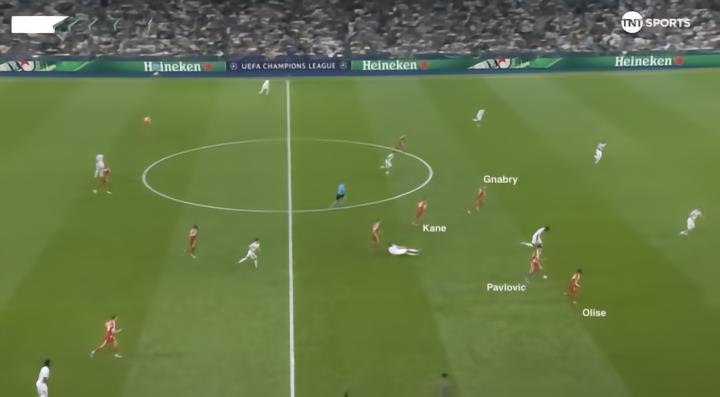
“After Pavlovic intercepted the ball, I saw Serge (Gnabry) start to move forward. If I were there, I would be the one making that forward move, so that Michel could have more freedom to break through one-on-one after receiving the ball.”
“I like to wait and see how the attack unfolds. Real Madrid players will naturally track back and try to stop Serge, Lucho (Diaz), or Michel, so I will stop in one position first. Michel might score one-on-one – if that happens, that would be best – but if not, I will end up standing in the space on the edge of the penalty area because two of their players have already pushed up, and the wingers have also left their positions, so at that moment I am waiting in my mind, even though I am still running.”
As the attack progressed, Kane remained behind, staying in open space, watching attacking and defending players whiz past him. He would glance back two or three times. What was he checking?
"I look at everything. I mentally visualize everything around me. I check if there's another midfielder or defender on the blind side. When I get the ball, do I have a teammate I can pass to? You're always mentally visualizing everything around you."
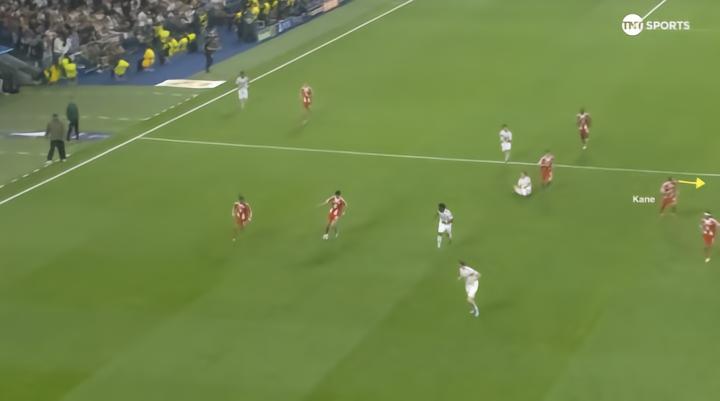
“For example, here, when I look back and see the winger is far away from me, and then I see this defender pressing forward, I know that the entire area on the edge of the penalty area will belong to me.”
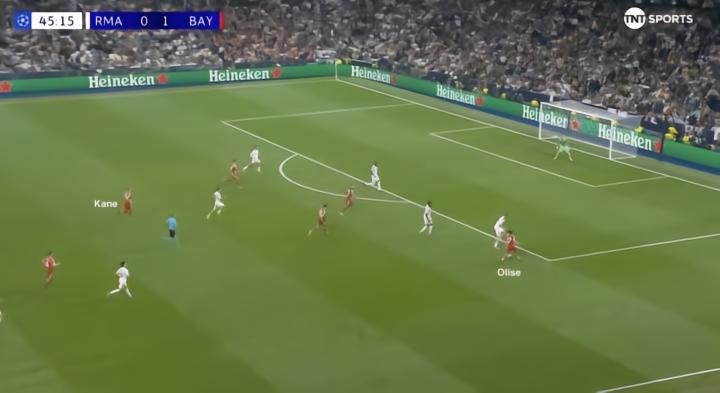
"If you move the video forward a little..."
"...and then you'll see me almost stop, because I know what's going to happen next."
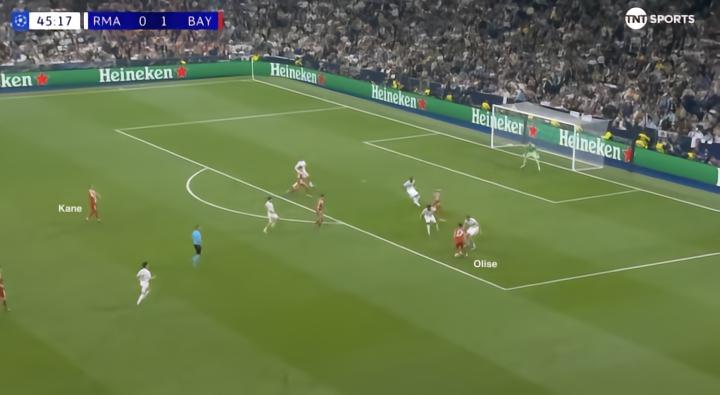
At that moment, Olise had reached the edge of the penalty area. His threat drew the attention of two defenders. Harry Kane pointed out that Gnabry's diagonal run distracted the third defender, Antonio Rüdiger.
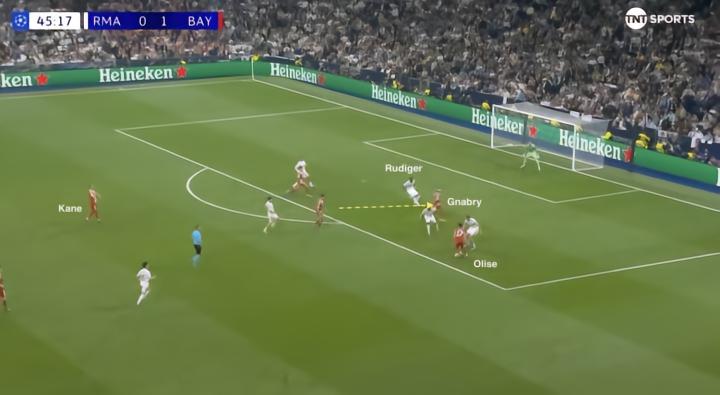
"But the really important thing in that play is the way Michael passed it to me; that makes a big difference. Some players in that situation would just make a strong lateral pass, and then I would have to control the ball first."
"But Michael knew how I wanted to shoot, and he put the ball in the perfect position so I could finish it off immediately."
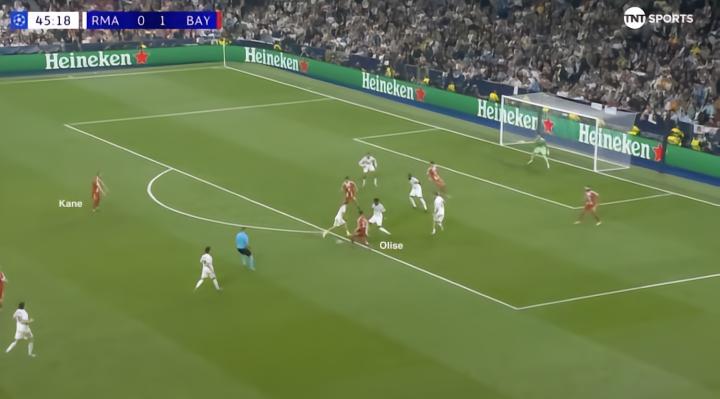
“Yes, now I have the ball speed I want. If he passes it harder, I have to stop the ball and then shoot with my left foot. But as soon as the ball leaves my foot, I know I will shoot from inside the penalty area.”
“Then it depends on the position of the defenders. I was looking at where Rudiger was standing. Actually, I could have hit the ball to either side. But I think it would be more difficult for him to face the goal at the near post because his momentum would have carried him towards the center of the goal, and now he would have to turn back.”
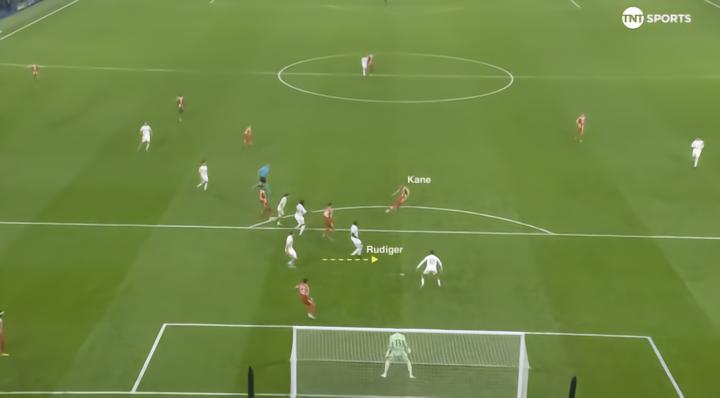
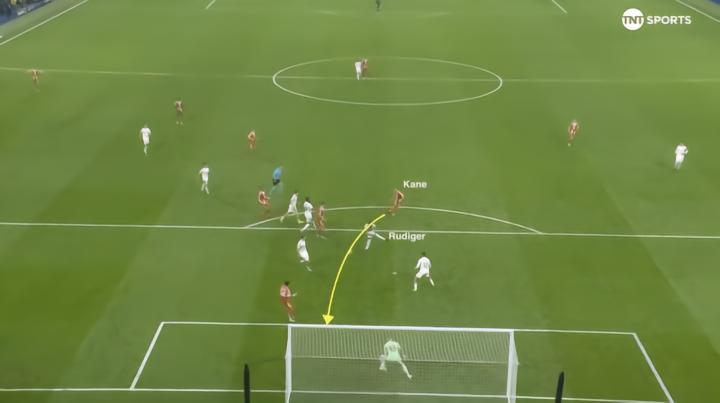
The same applies to Rüdiger; he couldn't block a shot that sent the ball to the other side of his body, against his own direction of movement.
During the interview, Kane mentioned that he often uses dummies in training and how important these tools are to his intuition for finding shooting opportunities.
The expected goal value for this chance against Real Madrid was only 0.07xG. However, Bayern's counter-attack speed, the quality of Olise's final pass, and how Kane used the positions of the defenders and goalkeeper to lead the finish made this goal look much easier.
In the next round of the Champions League, Bayern Munich will face Paris Saint-Germain. In the first leg of that semi-final, PSG won 5-4, a match that will be remembered as one of the most classic European clashes of the past decade. Bayern's fourth goal was a masterpiece.
Diaz scored the goal, first with a masterful touch, then with a clever feint that made Marquinhos lean back, but the opportunity actually came from Kane's brilliant pass.
"So I always want to turn around and pass the ball forward quickly," he said as the camera paused on the moment he received the ball.
“When I turned around, I knew Luis Diaz would either drift to the wing or stand in that number 10 position and make a run from there. In the instant I turned and looked up, I saw him start to run and I saw that he didn’t drift to the wing.”
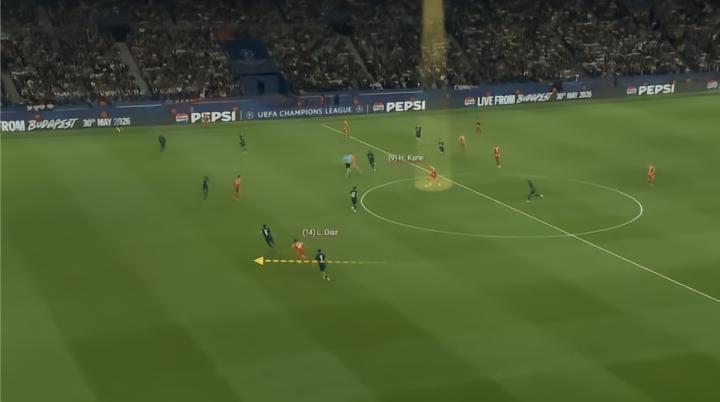
Bayern Munich struggled at times during the match, trailing 2-5 at halftime. Dayot Upamecano headed in a set piece to make it 3-5, but the situation remained precarious.
“I always want to make the most effective passes and pass forward. If you're leading 3-0, you might just want to hold onto the ball. But it was 3-5; we needed to score, so we had to take risks.”
“I think this is one of the best passes of my career. The reason is in every detail. It has to be precise. The ball is like a floating outside-of-the-foot pass, but it has to drop at the right moment.”
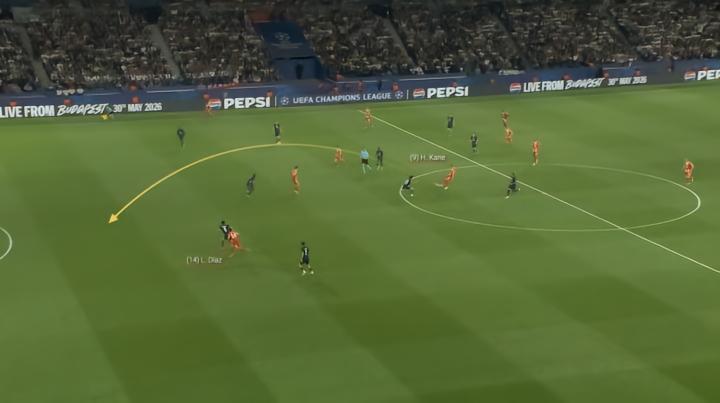
“Luis Diaz handled it even better.”
"That kind of pass is like a quarterback's long pass. I'm a die-hard NFL fan, and you'll see them drop the ball precisely over the defender's head."
Like that kind of pass Tom Brady made to Randy Moss many years ago? Yes, he laughed and agreed.
“But Luis Diaz still has a lot to do; it was his touch and finishing that made this goal so special.”
Since leaving England, Kane's ability has received more attention. Bayern's style of play often requires him to drop deeper, which highlights his creativity and showcases the versatility of his passing game, enabling him to both create chances and advance the game from the outset.
As can be seen from the visualization below, he can accurately send the ball into the penalty area, and he also likes to distribute the ball to the left and right flanks to push the team forward.
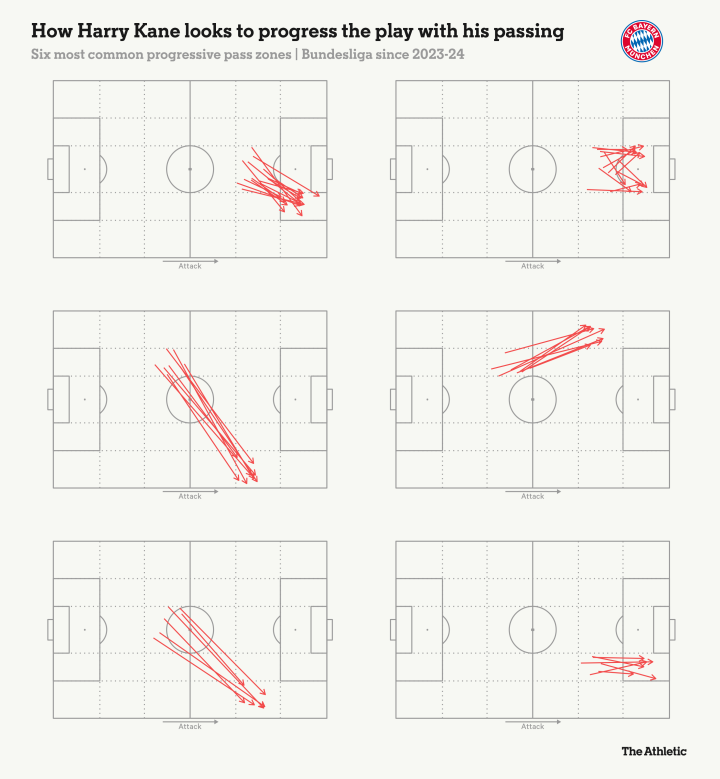
His arsenal seems to be expanding. Kane can deliver powerful long diagonal passes very early on, but his passes also often incorporate finesse, allowing him to penetrate the opponent's defense in short distances.
As he got older, did he consciously refine this aspect of his performance?
"To be honest, not that much. When I talk about passing, especially long passes, I used to value it almost as much as shooting during my youth academy days. I remember back then, I would arrive at the training ground an hour early with a teammate. He would stand on one side of the penalty area, and I would stand on the other side, and then we would practice passing over and over again. Left foot, right foot, left foot, right foot."
“So I feel I’ve always had this ability. Even in my last few years at Tottenham, we saw it more and more because I had more freedom to receive the ball in deeper positions. Maybe when Mauricio Pochettino was in charge, I was more like a number 9, waiting for the team to deliver the ball up, and then making runs from behind the defense. I think from the time José Mourinho came to the club, you started to see me making more assists, and gradually developed that connection with Son Heung-min. It was the same when Antonio Conte was in charge; I would play in deeper positions, either as a wing-back or a full-back.”
“I think my passing ability has always been there. I played a lot of midfield in the youth team, so I know the different areas of the pitch and I like to stand in those areas. I think I can receive the ball under pressure and then pass it forward effectively to help the team.”
Kane's output in these positions is already well-documented. Last season, he delivered 84 passes that broke down defenses in the German top flight alone. The strikers behind him only managed 29.
This can be attributed to Vincent Kompany increasingly involving him in the attack at the start of possession. In the 2025-26 season, it was not uncommon to see Kane receive the ball directly from goalkeeper Manuel Neuer and begin orchestrating attacks from between the center-backs.
As he said, part of the reason is that he can handle the ball effectively even under pressure when he receives it. But there is also a tactical purpose behind it.
“We like to test how committed our opponents are,” Harry Kane explained.
"It's easy for a team to say they'll man-mark us, but it's not so easy to actually do it. If you're a center-back and you're marking me, and I'm dropping back near the halfway line, you might think it's okay to follow me there."
"But if I drop back a little further, suddenly you, the center-back, become the one pressing the most. For the opponents and their coaches to really stick to this arrangement, they need a lot of training."
The final video clip is from Bayern Munich's 5-0 victory over Hamburg in September 2025, where Kane played a key role in an attack that flowed from one end of the pitch to the other. This was an early example of Bayern's counter-attacking style last season, showcasing the growing understanding between the forwards.
After Hamburg's cross was cleared, the shot paused, showing the ball at Kane's feet.
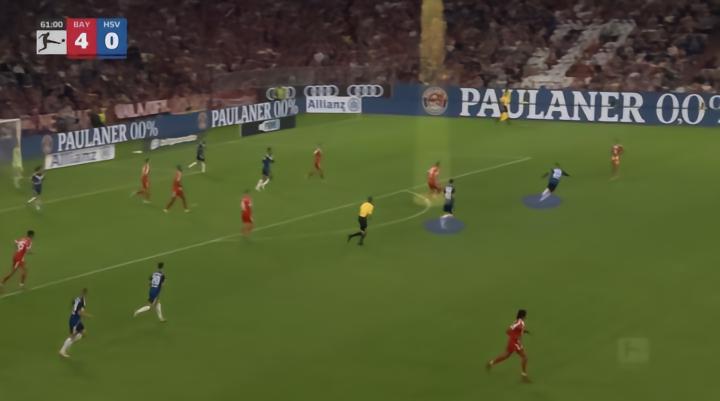
"For me, the key here is getting past my opponent. Can I get ahead of him? Because if I can do that, I'll be in a better position with the momentum. So, if I'm defending myself in that position, I'll try to get ahead and stop myself from starting. I'll try to block or hold him back."
"After the ball was passed to Lucho, Nicola Jacson effectively widened the space on the field. The coach always wants one or two players to make forward runs to expand the field and force the defenders to drop back."
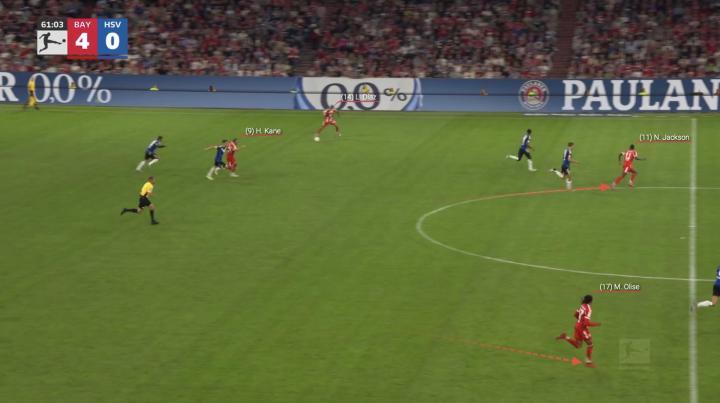
“Sometimes, when Michael gets the ball in this position, I'll run laterally in front of him and wait for his through ball. This gives him two options: he can pass the ball to me or he can cut inside and shoot. This time I was a little further away from him, so I chose to drop back a bit and create about five yards of space between myself and the center-back.”
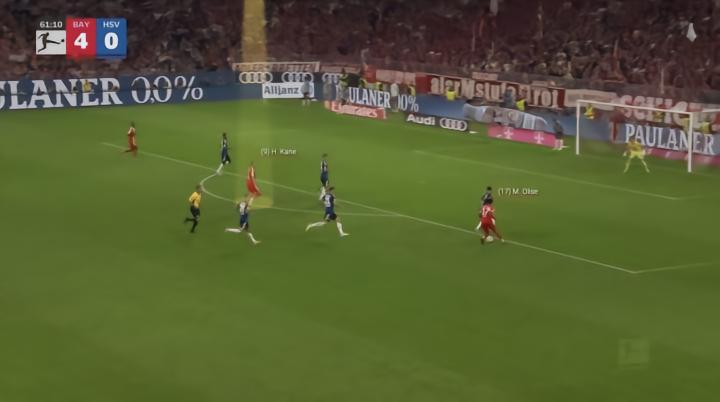
"Michael saw it and delivered a powerful pass. This again demonstrates how important power is in a pass. If it's not powerful enough, the ball won't reach my feet. Next comes controlling the ball and shooting."
“But this first touch was good because it took me away from the center-back’s charge. Many defenders would expect you to turn in that position and shoot with your left foot, but I pulled the ball back to my right foot – I think this goal really showcased a lot of aspects of my game.”
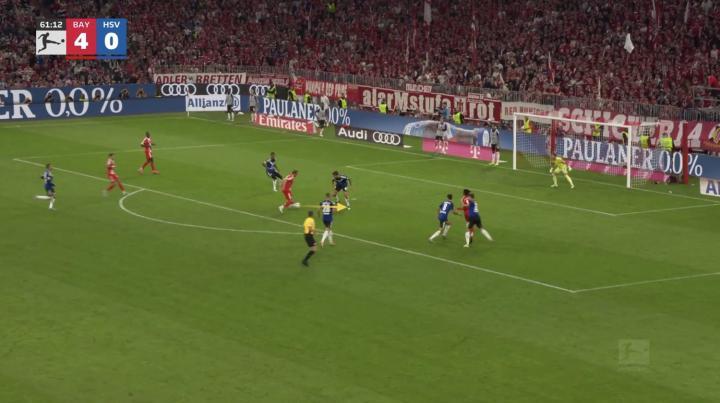
What deserves special attention is his stamina: Kane ran 100 yards to score that goal, and this wasn't an isolated incident. The reason he can play deeper and still maintain such a high goal tally is precisely because he covers a significant amount of running distance. STATSports statistics show that last season he covered more than 10 kilometers in 30 games, while top strikers typically only cover around 9.2 to 9.4 kilometers. In 18 of those games, he covered more than 11 kilometers. For a player who just turned 33, these statistics are quite remarkable.
This is surprising considering the injuries he suffered in the first half of his career. Between 2014 and 2020, he suffered three serious ankle injuries and a hamstring tear, so severe that some began to question his career longevity. Even today, some still consider Kane an injury-prone player, although the past years have proven otherwise.
“The biggest advantage of top players is that they can play anytime, and I’m very proud of that,” he said. “Some people would attribute it to luck, but I work very hard behind the scenes to keep them available as much as possible.”
Since joining Germany in 2023, he has only missed six Bayern Munich matches due to injury. In those seasons, he also made 50 or more appearances for both club and country.
Judging from his abilities—passing range and physical condition—Kane could have been expected to become a striker whose ability to make forward runs declined as he aged, relying more on his intelligence and technique to maintain his peak performance.
But the reality is quite the opposite; his athleticism has become increasingly apparent. Last season, he achieved his personal fastest speed (32.2 km/h) in the German top flight, and throughout the season, he accelerated even more and maintained high speeds for even longer periods. This is no coincidence.
“After injuring my hamstring in January 2020,” he explained, “I basically had the muscle torn off the bone and had to have surgery. At that time, a lot of people were asking if I could ever get back to where I was. But I found a doctor who did a lot of acupuncture and nerve stimulation therapy, and working with him helped me 100% and also helped me with some old injuries.”
"Since then, I've been pushing myself forward off the court as much as I can. Ice baths, saunas, recovery training. When you're in your late twenties, you start to realize that a career doesn't last forever, and you're not the same person you were at 21. But I'm also the kind of person who likes to let things take their course."
"Once athletes reach their 30s, people always start asking them when they're going to slow down. One of my idols is Tom Brady, who played until he was 44. I think sometimes it's just a matter of perception. When everyone around you starts talking about slowing down, you start to believe it. But for me, it's the opposite."
“I’ll just keep pushing myself and see where this takes me until I actually see it in the data or in the performance.”
By the end of last season, Kane had scored 97 goals in 94 German top-flight league appearances, becoming the fastest player in history to reach that total. He did so faster than Gerd Müller and Robert Lewandowski.
Including all competitions, he became the fastest player in the history of clubs in Europe's top five leagues to reach 100 goals. His partnerships with Olisé and Diaz, appearing so frequently in his highlight reels, are extremely efficient. In last season's German top flight and Champions League alone, these three players were combined for 141 goals and assists.
Kane's own stats are unmatched.
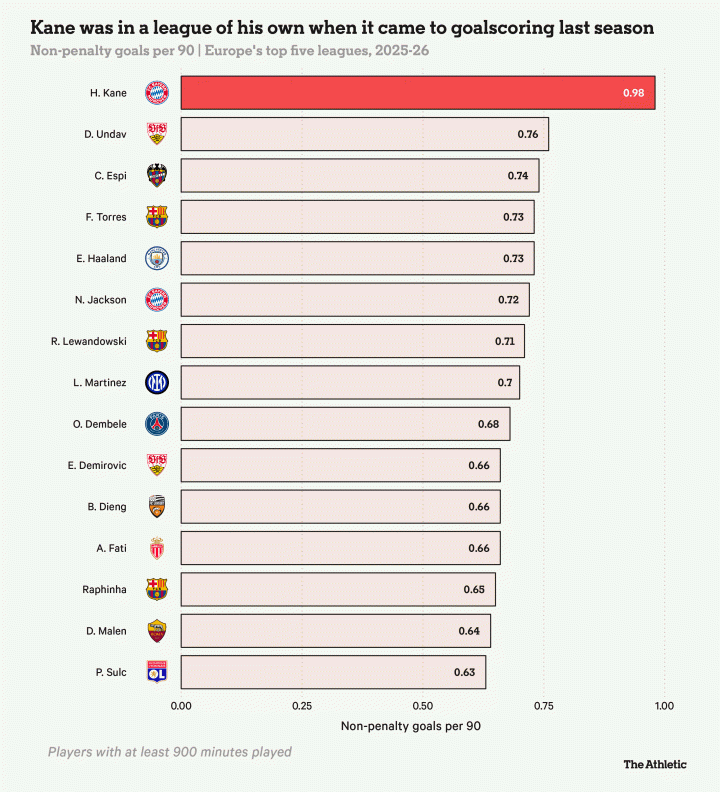
Bayern Munich are close to signing Harry Kane to a new three-year contract, with both sides confident of reaching an agreement. This is not surprising. Kane's relationship with Bayern is nothing short of perfect. Last weekend, they lifted the German Super Cup together, and on Friday night, they thrashed Stuttgart 5-1 in their Bundesliga opener.
The Ballon d'Or voting is about to begin, and for Kane, this honor has never seemed so within reach. Kane is perhaps the most complete attacking player in world football today, and his ability to compete for this highest individual award is stronger than ever.
(Other contributors: Connor O'Neal, Tom Harris)